What is Positive Pay System in Banking? Complete Guide for Beginners
Disclaimer: This article is for general information/education and is not investment advice. The information is shared in good faith and for general informational purposes only. Ujjivan SFB does not make any representations or warranties regarding the accuracy, completeness, or reliability of the content.
May 08, 2026

The Positive Pay System (PPS) is a security feature introduced by the Reserve Bank of India (RBI) to make cheque payments safer. Under this system, cheque issuers share key cheque details with their bank before the cheque is cleared. The bank then verifies these details during processing to reduce the risk of cheque fraud, tampering, and unauthorised changes.
In this article, we’ll understand how Positive Pay System works, where it fits into cheque clearing, whether it is mandatory, and why it matters for high-value cheque payments.
What is Positive Pay and How Does it Work?
Positive Pay is a security feature that banks use to cross-verify cheque details before clearing payments through Cheque Truncation System (CTS). It is designed to reduce the risk of cheque fraud, such as changes to the amount, payee name or forged signatures.
Here’s How Positive Pay System Works:
Step 1: You issue a cheque
Step 2: You submit the cheque details to your bank through mobile banking, internet banking, SMS, or ATM
Details Required for Positive Pay:
Step 3: The bank securely stores these details
Step 4: When the cheque is presented and reaches your bank for verification, the bank compares the cheque details with the information submitted earlier
Is Positive Pay Mandatory?
Though not mandatory for all transactions, RBI guidelines state that banks must provide the facility for cheques of ₹50,000 and above.
Do You Need to Provide Positive Pay Details Separately for Each Cheque?
Yes, Positive Pay details need to be submitted separately for every cheque you issue (if applicable as per your transaction value). Even if the cheque is issued to the same person or organisation, and for the same amount, the bank verifies each cheque separately using its unique cheque number. Therefore, each cheque requires a separate submission.
When Should You Submit Positive Pay Details?
It is best to submit Positive Pay details at the time you issue the cheque or immediately after. This helps ensure that the submitted details match the cheque exactly, such as the amount and the payee name. Submitting the details early allows the bank to verify the cheque without delay when it is presented for clearing.
Final Thoughts
Positive Pay makes cheque verification more secure and systematic by aligning the details at the time of issue with the details checked during clearing. This reduces dependence on manual checks and brings more consistency to the process.
For higher-value cheques, this additional verification step helps reduce the risk of fraud and processing issues.
Disclaimer:
The contents herein are only for informational purposes and generic in nature. The content does not amount to an offer, invitation or solicitation of any kind to buy or sell, and are not intended to create any legal rights or obligations. This information is subject to updation, completion, amendment and verification without notice. The contents herein are also subject to other product-specific terms and conditions, as well as any applicable third-party terms and conditions, for which Ujjivan Small Finance Bank assumes no responsibility or liability.
Nothing contained herein is intended to constitute financial, investment, legal, tax, or any other professional advice or opinion. Please obtain professional advice before making investment or any other decisions. Any investment decisions that may be made by the you shall be at your own sole discretion, independent analysis and evaluation of the risks involved. The use of any information set out in this document is entirely at the user’s own risk. Ujjivan Small Finance Bank Limited makes no representation or warranty, express or implied, as to the accuracy and completeness for any information herein. The Bank disclaims any and all liability for any loss or damage (direct, indirect, consequential, or otherwise) incurred by you due to use of or due to investment, product application decisions made by you on the basis of the contents herein. While the information is prepared in good faith from sources deemed reliable (including public sources), the Bank disclaims any liability with respect to accuracy of information or any error or omission or any loss or damage incurred by anyone in reliance on the contents herein, in any manner whatsoever.
To know more about Ujjivan Small Finance Bank Products Visit:"https://www.ujjivansfb.bank.in"
All intellectual property rights, including copyrights, trademarks, and other proprietary rights, pertaining to the content and materials displayed herein, belong
to Ujjivan Small Finance Bank Limited or its licensors. Unauthorised use or misuse of any intellectual property, or other content displayed herein is strictly prohibited and the same is not intended for distribution to, or use by, any person in any jurisdiction where such distribution or use would (by reason of that person’s nationality, residence or otherwise) be contrary to law or registration or would subject Ujjivan Small Finance Bank Limited or its affiliates to any licensing or registration requirements.
FAQs
1. Can I submit Positive Pay details after issuing the cheque?
Yes, you can submit Positive Pay details after issuing the cheque, as long as it is done before the cheque is presented for clearing. However, it is better to submit the details immediately to avoid any mismatch or delay.
2. Can I modify Positive Pay details after submitting them?
Some banks may allow cancellation or modification before processing, while others may not permit changes after submission. The process varies from bank to bank.
3. What happens if the payee name entered in Positive Pay is slightly different?
Even small differences in the payee name can lead to the cheque being flagged for verification. It is important to enter the details exactly as written on the cheque.
4. Is Positive Pay available for all bank accounts?
Positive Pay is typically available for most account holders issuing cheques, but the availability of channels (SMS, app, etc.) may vary by bank.
5. Will a cheque be rejected if Positive Pay is not used?
Not always. The cheque may still be processed through standard clearing, unless the bank has made Positive Pay mandatory for that cheque value.
Latest Blogs
Related Blogs
Cash Flow Management for Small Businesses: Practical Tips for MSME Growth
An MSME (Micro, Small & Medium Enterprise) may have strong sales and regular customer orders, yet it can still struggle to pay vendors, salaries, rent, EMIs, or taxes on time.

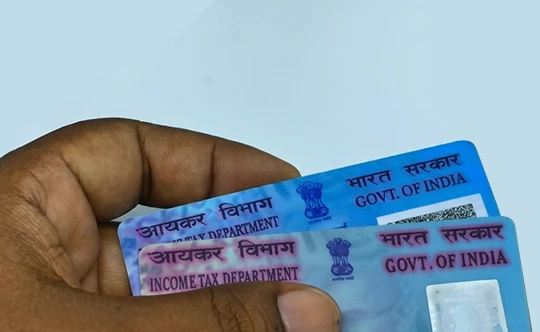
PAN is Now Mandatory for These Transactions: Everything You Need to Know After Form 97 Replaced Form 60
India's tax rules saw a meaningful shift from April 1, 2026, when the Income Tax Act, 2025 came into force.

Cash Deposit Limits in Current Accounts vs Savings Accounts: Key Differences for Business Owners
When your business starts handling more cash, frequent deposits require closer tracking.
What is Marginal Utility and Why It Matters?
Marginal utility helps explain how individuals make consumption and spending decisions, why demand behaves the way it does, and how value is perceived across different levels of usage.
Rupee Cost Averaging: What it Means and How SIP Uses It
Rupee cost averaging is an investment method where you invest a fixed amount at regular intervals, regardless of market conditions.
Quick Links
Follow us


Download our Mobile Banking App



Download our Hello Ujjivan App

Registered with DICGC


© 2026 Ujjivan Small Finance Bank Ltd. CIN NO: L65110KA2016PLC142162